
Indira Gandhi Matri Shishu Sankalp Yojna: Himachal Pradesh’s Maternal & Child Nutrition Scheme
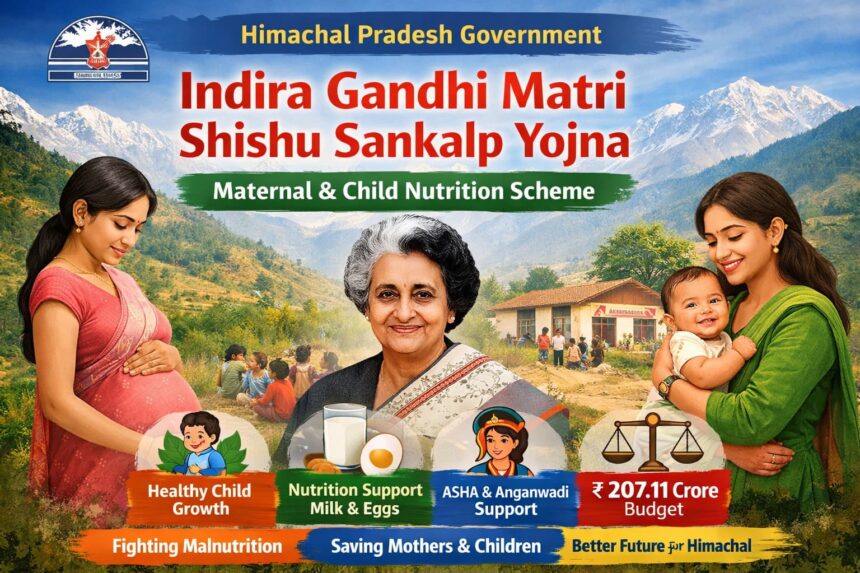
Indira Gandhi Matri Shishu Sankalp Yojna is a flagship maternal and child nutrition scheme launched by the Government of Himachal Pradesh to strengthen the health of pregnant women, lactating mothers, and children below six years of age. The scheme aims to break the cycle of inter-generational malnutrition and improve early childhood development across the state.
- What Is Indira Gandhi Matri Shishu Sankalp Yojna?
- Key Objectives of the Scheme
- Target Beneficiaries
- Key Features of Indira Gandhi Matri Shishu Sankalp Yojna
- 🥛 Nutritional Support
- 🏥 Health Monitoring
- 👩⚕️ Frontline Worker Involvement
- 🔗 Convergence of Departments
- Budget and Coverage
- Why This Scheme Is Important
- Conclusion
With a strong focus on the first 1,000 days of life, the program represents one of Himachal Pradesh’s most comprehensive nutrition-centric welfare initiatives.
What Is Indira Gandhi Matri Shishu Sankalp Yojna?
The Indira Gandhi Matri Shishu Sankalp Yojna (IGMSSY) is designed to provide nutrient-rich supplementary food, health monitoring, and early intervention for mothers and young children. The scheme addresses both preventive and curative aspects of malnutrition, ensuring healthier outcomes for future generations.
Named after former Prime Minister Indira Gandhi, the scheme reflects a welfare-oriented approach rooted in social equity and public health.
Key Objectives of the Scheme
The primary objectives of the Indira Gandhi Matri Shishu Sankalp Yojna include:
- Reducing child malnutrition and maternal under-nutrition
- Improving birth outcomes and infant growth indicators
- Providing balanced nutrition during pregnancy and lactation
- Preventing Severely Acute Malnutrition (SAM) and Moderately Acute Malnutrition (MAM)
- Strengthening monitoring through health and nutrition tracking systems
Target Beneficiaries
The scheme focuses on the most vulnerable groups:
- Children below 6 years of age
- Pregnant women
- Lactating mothers
- Low birth-weight infants
- SAM and MAM identified children
These beneficiaries are covered through Anganwadi centres and community-level outreach programs.
Key Features of Indira Gandhi Matri Shishu Sankalp Yojna
🥛 Nutritional Support
- Supply of protein-rich and calorie-dense foods
- Inclusion of milk, eggs, and fortified nutrition
- Focus on micronutrients essential for growth and immunity
🏥 Health Monitoring
- Regular growth monitoring of children
- Use of Mother & Child Protection (MCP) cards
- Digital tracking via nutrition monitoring tools
👩⚕️ Frontline Worker Involvement
- Active role of ASHA and Anganwadi workers
- Home visits, counseling, and follow-ups
- Performance-based incentives for grassroots workers
🔗 Convergence of Departments
- Coordination between health, women & child development, sanitation, and education departments
- Holistic delivery of services rather than isolated interventions
Budget and Coverage
- Total financial outlay: ₹207.11 crore
- Expected beneficiaries: Nearly 3 lakh women and children
- Statewide implementation across Himachal Pradesh
Why This Scheme Is Important
Despite progress, malnutrition remains a major challenge in India. Poor maternal nutrition directly affects child survival, cognitive development, and long-term productivity. By targeting nutrition before birth and during early childhood, the Indira Gandhi Matri Shishu Sankalp Yojna tackles the root causes rather than symptoms.
The scheme is expected to:
- Lower infant and maternal mortality rates
- Improve learning outcomes in early childhood
- Reduce healthcare burden in the long term
Conclusion
The Indira Gandhi Matri Shishu Sankalp Yojna is a significant step toward building a healthier and stronger Himachal Pradesh. By prioritizing maternal and child nutrition, the state is investing in its most valuable resource—its people.
As implementation progresses, this scheme has the potential to become a model nutrition program for other states in India.