
Delhi Government Launches WhatsApp-Based Digital Citizen Services Platform in 2026
Transforming Governance Through Conversational AI
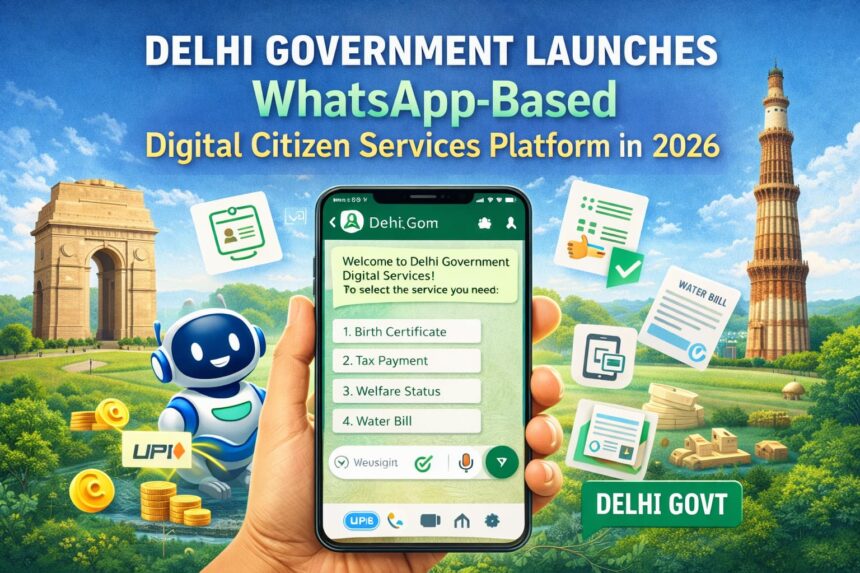
The Delhi government is set to take a major step toward digital-first governance with the launch of a WhatsApp-based citizen services platform in March 2026. The pilot initiative aims to deliver around 50 public services directly through WhatsApp, using AI-enabled chatbots and UPI-powered payments.
- Transforming Governance Through Conversational AI
- What Is the WhatsApp-Based Digital Citizen Services Platform?
- Services Expected in the Pilot Phase
- Role of AI-Enabled Chatbots
- Why WhatsApp Was Chosen as the Platform
- Security, Privacy, and Data Protection
- Impact on Digital Governance in India
- Challenges to Watch
- Conclusion
This move positions Delhi at the forefront of digital citizen services in India, making government interactions faster, simpler, and more accessible—especially for residents who may not use traditional government portals or apps.
What Is the WhatsApp-Based Digital Citizen Services Platform?
The upcoming platform will allow Delhi residents to access essential public services via WhatsApp, India’s most widely used messaging application. Instead of navigating complex websites or visiting government offices, citizens will be able to interact with an AI chatbot in a familiar chat interface.
Key Objectives of the Platform
- Reduce paperwork and physical visits to government offices
- Improve service delivery speed and transparency
- Expand access to digital governance across income and literacy levels
- Integrate payments and tracking into a single conversational flow
Services Expected in the Pilot Phase
The Delhi government plans to roll out approximately 50 services during the pilot. While the full list is yet to be officially published, the platform is expected to include:
Core Citizen Services
- Issuance and download of birth, caste, and residence certificates
- Application status tracking for government documents
- Appointment booking for government offices
Financial and Tax Services
- Payment of local taxes and utility bills
- Government fee payments via Unified Payments Interface (UPI)
- Automated digital receipts and confirmations
Welfare and Social Services
- Welfare scheme enrollment and eligibility checks
- Pension and subsidy status tracking
- Notifications for benefit disbursements
Role of AI-Enabled Chatbots
At the heart of the platform is a conversational AI chatbot designed to handle citizen queries in real time. These chatbots will:
- Understand natural language queries (Hindi and English initially)
- Guide users step-by-step through service requests
- Provide instant responses for FAQs
- Escalate complex issues to human officials when required
By automating routine interactions, the system reduces administrative workload while ensuring 24/7 service availability.
Why WhatsApp Was Chosen as the Platform
Using WhatsApp as the service delivery channel is a strategic decision driven by reach and usability.
Key Advantages
- Over 500 million users in India
- No need to download a new app
- Low learning curve for first-time digital users
- Built-in support for documents, notifications, and payments
This approach reflects a broader trend in “platform-based governance”, where governments meet citizens where they already are—on everyday digital platforms.
Security, Privacy, and Data Protection
Given the sensitive nature of citizen data, the Delhi government has indicated that the platform will follow strict data security and privacy protocols, including:
- End-to-end encrypted communication via WhatsApp
- Secure authentication using OTPs and government databases
- Compliance with India’s data protection and IT regulations
- Limited data retention policies
Trust and transparency will be critical to large-scale adoption.
Impact on Digital Governance in India
If successful, Delhi’s WhatsApp-based public service model could become a template for other Indian states and urban local bodies.
Potential Long-Term Benefits
- Faster service delivery and reduced corruption
- Lower operational costs for government departments
- Improved citizen satisfaction and engagement
- Stronger digital inclusion across demographics
The initiative also aligns with India’s broader Digital India vision, emphasizing paperless, cashless, and presence-less governance.
Challenges to Watch
While promising, the platform will need to address several challenges:
- Ensuring chatbot accuracy across complex services
- Managing high user volumes during peak periods
- Expanding language support beyond Hindi and English
- Bridging trust gaps among digitally hesitant citizens
The pilot phase in 2026 will be crucial for refining these aspects before a full-scale rollout.
Conclusion
The Delhi government’s WhatsApp-based digital citizen services platform represents a significant evolution in public service delivery. By combining AI chatbots, UPI payments, and a familiar messaging interface, the initiative has the potential to redefine how citizens interact with government—making services more accessible, efficient, and citizen-centric.
As the March 2026 launch approaches, all eyes will be on how effectively technology can simplify governance at scale.