
Jal Jeevan Mission 2.0 (New Phase): हर घर जल की ओर एक नया कदम
Introduction
Water is a basic necessity, yet millions of rural households in India have struggled with access to safe drinking water. The Jal Jeevan Mission (JJM), launched in 2019, aimed to provide tap water connections to every rural household.
- Introduction
- What is Jal Jeevan Mission 2.0?
- Key Objectives of the New Phase
- 1. Universal Tap Water Coverage
- 2. Water Quality Assurance
- 3. Source Sustainability
- 4. Greywater Management
- 5. Community Ownership
- What’s New in Jal Jeevan Mission 2.0?
- Enhanced Focus on Sustainability
- Digital Monitoring Systems
- Women Empowerment
- Convergence with Other Schemes
- Key Features
- Benefits of Jal Jeevan Mission 2.0
- Challenges in Implementation
- Future Outlook
- Conclusion
Now, with Jal Jeevan Mission 2.0 (New Phase), the government is taking this initiative further—focusing not just on access, but also on sustainability, quality, and long-term water security.
What is Jal Jeevan Mission 2.0?
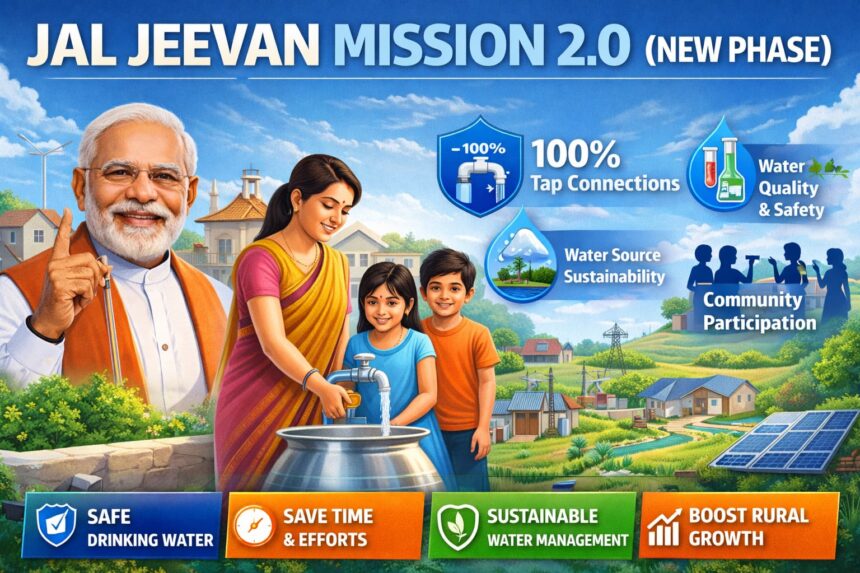
Jal Jeevan Mission 2.0 is the upgraded phase of the original mission. While Phase 1 focused on infrastructure and connections, Phase 2 emphasizes:
- Sustainability of water sources
- Water quality monitoring
- Greywater management
- Community participation
Key Objectives of the New Phase
1. Universal Tap Water Coverage
Ensuring 100% Functional Household Tap Connections (FHTC) in rural areas.
2. Water Quality Assurance
- Regular testing of water quality
- Addressing issues like arsenic, fluoride, and contamination
3. Source Sustainability
- Rainwater harvesting
- Groundwater recharge
- Protection of local water bodies
4. Greywater Management
- Reuse of wastewater for agriculture and other purposes
- Reducing water wastage
5. Community Ownership
- Empowering Gram Panchayats and local communities
- Training local stakeholders for maintenance
What’s New in Jal Jeevan Mission 2.0?
Enhanced Focus on Sustainability
Unlike Phase 1, which mainly focused on providing connections, this phase ensures long-term availability of water.
Digital Monitoring Systems
- Use of IoT and digital dashboards
- Real-time tracking of water supply systems
Women Empowerment
- Women involved in water committees
- Training for testing and managing water quality
Convergence with Other Schemes
Integration with schemes like:
- MGNREGA
- Swachh Bharat Mission
- Atal Bhujal Yojana
Key Features
- Tap water supply of 55 liters per person per day
- Priority to water-stressed and quality-affected areas
- Village-level action plans
- Smart metering and monitoring
Benefits of Jal Jeevan Mission 2.0
1. Health Improvements
- Reduction in water-borne diseases
- Access to clean and safe drinking water
2. Time Saving
- No need to fetch water from long distances
- Especially beneficial for women and children
3. Economic Growth
- Increased productivity in rural areas
- Job creation in infrastructure and maintenance
4. Environmental Sustainability
- Better water conservation practices
- Efficient use of water resources
Challenges in Implementation
- Water scarcity in drought-prone regions
- Maintenance of infrastructure
- Behavioral change at the community level
- Ensuring consistent water quality
Future Outlook
Jal Jeevan Mission 2.0 is expected to:
- Strengthen rural infrastructure
- Promote water conservation culture
- Ensure long-term water security
- Improve quality of life in villages
Conclusion
The Jal Jeevan Mission 2.0 (New Phase) is more than just a water supply program—it’s a step toward sustainable rural development. By focusing on quality, sustainability, and community participation, the mission aims to ensure that “Har Ghar Jal” becomes a lasting reality, not just a short-term achievement.